
Fire Safety Corner
Fire Extinguisher Classes Explained: A Complete Guide
Not every fire extinguisher works on every fire. Learn what Classes A, B, C, D, and K mean, how extinguisher ratings work, and how to choose appropriate fire protection for your home, vehicle, workplace, kitchen, or specialized risk.

The correct extinguisher depends on the material that is burning and the hazards present.
Welcome to Fire Safety Corner, where we make fire protection easier to understand and easier to put into practice.
A fire extinguisher can be an important first line of defense—but only when the extinguisher matches the type of fire, the fire is still small, and you have a safe way out.
The U.S. Fire Administration estimates that approximately 343,000 residential building fires occurred in the United States in 2024, with cooking identified as the leading cause.
The Quick Answer: Which Fire Extinguisher Do You Need?
For many homes, offices, garages, and general-purpose spaces, a multipurpose ABC fire extinguisher is a common starting point because it can be used on ordinary combustible materials, flammable liquids, and energized electrical equipment.
However, no single extinguisher is appropriate for every hazard. You may need:
- Class A protection for wood, paper, cloth, and similar materials.
- Class B protection for gasoline, solvents, oils, and other flammable liquids.
- Class C protection for energized electrical equipment.
- Class D protection for combustible metals.
- Class K protection for commercial cooking oils and fats.
- A hazard-specific solution for lithium-ion batteries, sensitive electronics, machinery, or specialized industrial risks.
The correct choice depends on what could burn—not simply the size of the room.
What Are the Five Fire Extinguisher Classes?
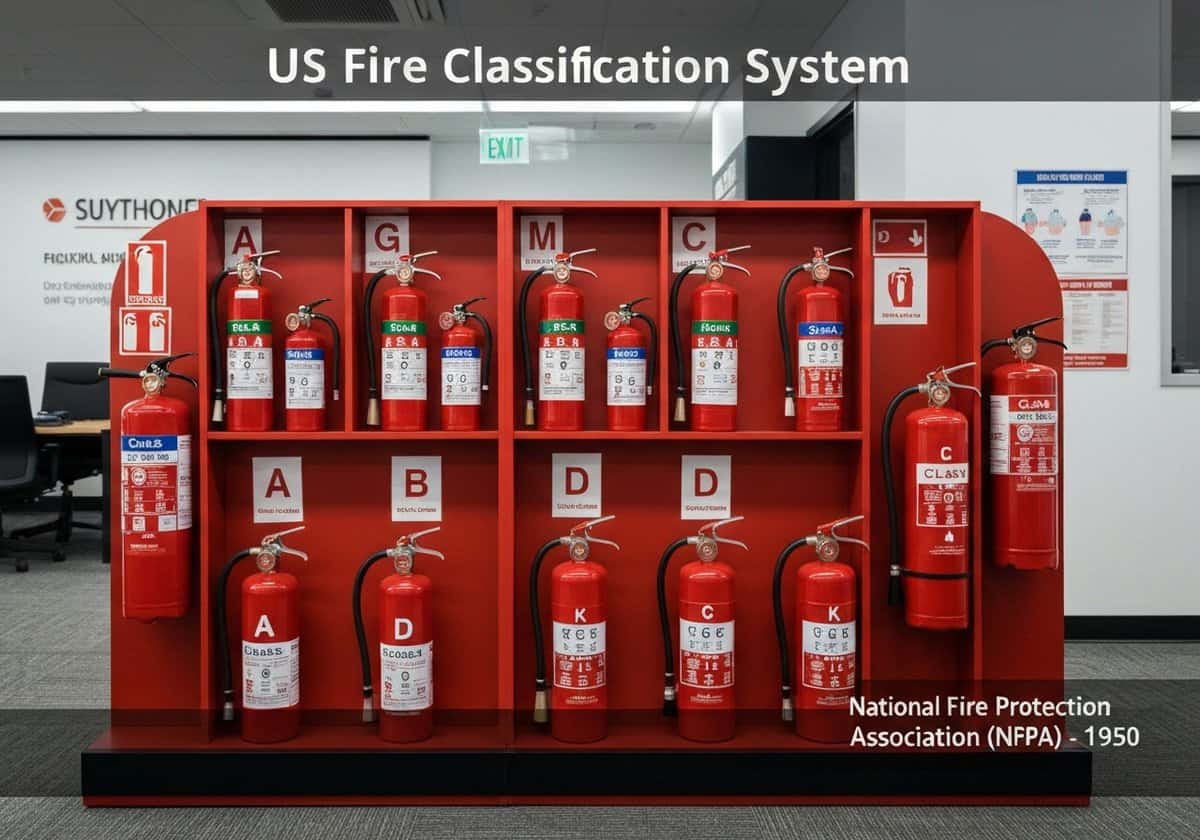
Fire extinguishers in the United States are classified according to the type of fuel involved in the fire.
| Fire class | What is burning? | Common examples |
|---|---|---|
| Class A | Ordinary combustible materials | Wood, paper, cardboard, cloth, rubber, and many plastics |
| Class B | Flammable liquids and gases | Gasoline, diesel, solvents, oil-based paint, propane, and alcohol |
| Class C | Energized electrical equipment | Electrical panels, wiring, appliances, computers, and machinery |
| Class D | Combustible metals | Magnesium, titanium, sodium, potassium, and certain metal powders |
| Class K | Cooking oils and fats | Deep fryers and commercial cooking appliances |
These classifications help you match the extinguishing agent to the fuel involved. Using the wrong agent can be ineffective and, in some situations, can spread the fire or create an additional hazard.
Class A Fires: Wood, Paper, and Ordinary Combustibles
Class A fires involve materials commonly found in homes, offices, stores, and warehouses, including:
- Wood
- Paper and cardboard
- Fabric
- Trash
- Rubber
- Many plastics
Water-based extinguishers may be rated for Class A fires, while many multipurpose dry-chemical extinguishers are rated for Classes A, B, and C.
Class B Fires: Flammable Liquids and Gases
Class B fires involve substances such as:
- Gasoline
- Diesel fuel
- Paint thinner
- Solvents
- Alcohol
- Petroleum-based oils
- Propane and other flammable gases
These hazards are frequently found in garages, workshops, service facilities, factories, laboratories, and fuel-storage areas.
Class B fires require an agent that can interrupt combustion or separate the fuel from oxygen. Water can spread a burning flammable liquid and should not be used unless a specifically designed and approved system calls for it.
Class C Fires: Energized Electrical Equipment
Class C fires involve equipment that is still connected to an electrical power source, such as:
- Electrical panels
- Wiring
- Fuse boxes
- Computers and servers
- Appliances
- Power tools
- Industrial machinery
The “C” rating means the extinguishing agent is suitable for use where energized electrical equipment is involved.
Once the electrical power has been safely disconnected, the remaining fire may be treated according to the material that continues to burn. For example, burning plastic housing may become a Class A fire after the electrical hazard has been isolated.
Carbon dioxide extinguishers are commonly rated for Class B and C fires and leave no residue, which can be useful around sensitive electronic equipment. However, they have limitations, including a relatively short discharge range and reduced effectiveness in windy conditions.
Class D Fires: Combustible Metals
Class D fires involve combustible metals such as:
- Magnesium
- Titanium
- Sodium
- Potassium
- Zirconium
- Certain aluminum or metal powders
These are specialized industrial hazards. A standard ABC extinguisher should not be treated as a substitute for an extinguisher specifically designed for the metal involved.
The correct Class D agent depends on the combustible metal, its physical form, and the surrounding process. Facilities working with combustible metals should perform a formal hazard assessment and follow the applicable Safety Data Sheets, equipment instructions, and fire codes.
Class K Fires: Commercial Cooking Oils and Fats
Class K fires involve high-temperature cooking oils and fats, particularly in commercial cooking appliances such as deep fryers.
Wet-chemical Class K extinguishers are designed to cool the burning oil and create a barrier that helps prevent reignition. Applicable commercial kitchens generally require Class K protection in coordination with the installed hood and suppression system, subject to local requirements.
What Does an ABC Fire Extinguisher Mean?
An ABC fire extinguisher is rated for:
- Class A: ordinary combustibles
- Class B: flammable liquids
- Class C: energized electrical equipment
Because it covers several common hazards, an ABC extinguisher is frequently selected for homes, offices, garages, vehicles, and general commercial environments.
However, “multipurpose” does not mean “appropriate for everything.”
An ABC extinguisher is not automatically suitable for:
- Combustible-metal fires
- Commercial deep-fat fryer fires
- Every lithium-ion battery incident
- Every sensitive electronic environment
- Large or rapidly spreading fires
Always check the classification printed on the extinguisher label and confirm that the product is suitable for the hazards in the protected area.
For the U.S. market, look for products evaluated and labeled by an appropriate nationally recognized testing laboratory. The U.S. Fire Administration advises consumers to look for a UL Listed or ULC Listed label, while OSHA requires portable workplace extinguishers to be approved by a nationally recognized testing laboratory.
How to Read a Fire Extinguisher Rating
A fire extinguisher may carry a rating such as:
2-A:10-B:C
Each part communicates different information.
The Number Before “A”
The number before the letter A indicates the extinguisher’s relative effectiveness on Class A fires.
According to the U.S. Fire Administration, each unit of A is associated with the equivalent effectiveness of 1.25 gallons of water on a Class A test fire.
- 1-A corresponds to 1.25 gallons.
- 2-A corresponds to 2.5 gallons.
- 4-A corresponds to 5 gallons.
This does not mean that the extinguisher necessarily contains water. It is a performance rating.
The Number Before “B”
The number before B relates to the approximate area, measured in square feet, of a Class B test fire that a trained operator may be able to extinguish.
For example, a 10-B rating relates to a Class B test fire of up to approximately 10 square feet.
Actual fire conditions can vary dramatically. Wind, smoke, fuel depth, obstructions, and operator experience can all affect performance.
Why There Is No Number Before “C”
The letter C indicates that the extinguishing agent is suitable for use around energized electrical equipment. It does not represent a separate fire-size rating.
What Is the Best Fire Extinguisher for a Home?
For many households, a properly listed multipurpose ABC extinguisher is a practical general-purpose option. Your home may need more than one type of fire-safety product depending on its layout and hazards.
Kitchen
Potential hazards include cooking oils, towels, packaging, appliances, and energized electrical equipment.
Keep the extinguisher accessible and positioned so that you do not have to move toward the stove or through the fire to retrieve it. Do not install it where flames could immediately block access.
Garage
Garages may contain gasoline, motor oil, paints, solvents, batteries, chargers, and power tools. Match the extinguisher to the actual stored materials and equipment.
Workshop
Woodworking, welding, metal processing, chemicals, and battery-powered tools create different hazards. A general ABC extinguisher may be only one part of the required protection.
Utility or Mechanical Area
Furnaces, electrical panels, boilers, generators, and energy-storage equipment may require carefully selected extinguishers and professional assessment.
Vehicle or RV
Choose a compact extinguisher that is suitable for the relevant vehicle hazards and can be securely mounted. An unsecured extinguisher can become dangerous during a sudden stop or collision.
Choose Protection for the Actual Risk
Browse fire-safety solutions for homes, vehicles, electrical equipment, workplaces, and lithium-ion battery risks.
Where Should a Fire Extinguisher Be Placed?
An extinguisher should be:
- Visible
- Easy to reach
- Properly mounted or secured
- Protected from damage
- Located along a normal path of travel
- Positioned where the fire is unlikely to block access
- Close enough to an exit that you can keep an escape route behind you
Do not hide the extinguisher behind furniture, place it inside a locked cabinet, or store it directly beside the most likely source of fire.
Commercial placement and travel-distance requirements depend on the fire classification, occupancy, extinguisher rating, and applicable fire code. Businesses should consult a qualified fire-protection professional and the local authority having jurisdiction.
When Should You Use a Fire Extinguisher?
A portable extinguisher is intended for a fire in its early stage—not a room that is filling with smoke or a fire that is spreading across multiple objects.
Before attempting to use an extinguisher, confirm that:
- Everyone in the area has been alerted.
- Someone has called 911.
- The fire is small and contained.
- You have the correct extinguisher.
- You can operate it safely.
- You have a clear exit behind you.
- Smoke, heat, or toxic gases are not preventing a safe approach.
Evacuation Comes First
Leave immediately when any of those conditions is not met. Residents may have less than two minutes to escape after a smoke alarm sounds, which is why evacuation must always take priority over property.
Never allow an extinguisher to give you a false sense of security. If one extinguisher does not control the fire promptly, evacuate, close doors behind you where possible, stay outside, and wait for the fire department.
How to Use a Fire Extinguisher: Remember PASS
The PASS method is a simple way to remember the basic operating sequence:
Pull the safety pin to unlock the extinguisher.
Aim the nozzle at the base of the fire, where the fuel is burning.
Squeeze the operating handle to discharge the extinguishing agent.
Sweep the nozzle from side to side across the base of the fire.
Continue watching the area after the visible flames are gone. Some fires can reignite. Never turn your back on the fire, and keep your exit accessible throughout the attempt.
The PASS method does not replace practical training. Contact your local fire department or a qualified fire-safety provider for hands-on instruction.
What About Lithium-Ion Battery Fires?
Lithium-ion batteries power phones, laptops, tools, e-bikes, scooters, energy-storage systems, and electric vehicles. These incidents should not be treated as ordinary electrical fires.
A damaged or defective battery can enter thermal runaway, an uncontrolled heating process that may release flammable and toxic gases, produce intense heat, and cause additional cells to fail. Reignition is possible even after visible flames have been extinguished.
Warning Signs
- Unusual heat
- Swelling or bulging
- Cracking
- Hissing, popping, or crackling
- A strong or unusual odor
- Smoke or gas venting
- A sudden change in color
- Failure to charge normally
If a Battery Is Smoking, Venting, or Rapidly Heating
- Move away from the device.
- Alert everyone nearby.
- Evacuate the area.
- Call 911.
- Do not inhale the smoke or gases.
- Do not handle a hot, swollen, or damaged battery.
- Follow the manufacturer’s emergency instructions.
There is no universal portable-extinguisher recommendation for every lithium-ion battery size, chemistry, device, and stage of failure. Larger systems and workplaces require hazard-specific planning, training, and emergency procedures.
Businesses that store, charge, repair, or transport lithium-ion batteries should assess:
- Battery chemistry and energy capacity
- Quantities stored
- Charging arrangements
- Separation from combustible materials
- Detection and ventilation
- Fire containment
- Emergency isolation
- Employee training
- Damaged-battery quarantine
- Reignition monitoring
- Coordination with the local fire department
How Should a Fire Extinguisher Be Maintained?
An extinguisher that is damaged, obstructed, or depressurized may not work when needed.
Perform regular visual checks and confirm that:
- The extinguisher is in its designated location.
- Access is not blocked.
- The safety pin and tamper seal are intact.
- The pressure gauge is within the operating range, where applicable.
- The hose and nozzle are unobstructed.
- The cylinder is not rusted, leaking, or damaged.
- The label and operating instructions remain readable.
- The extinguisher has not been discharged.
- Required inspections and servicing are current.
Some extinguishers can be recharged after use, while others must be replaced. Inspection, maintenance, hydrostatic testing, and replacement intervals vary by extinguisher type, manufacturer, and applicable regulations.
Follow the product label and arrange professional servicing when required.
Frequently Asked Questions
What is the most common fire extinguisher for a home?
A listed multipurpose ABC extinguisher is a common general-purpose choice because it covers ordinary combustibles, flammable liquids, and energized electrical equipment. Additional protection may be needed for specialized hazards.
Can one extinguisher be used on every fire?
No. Fire extinguishers are selected according to the fuel and hazard. Class D metal fires, Class K commercial cooking fires, and lithium-ion battery incidents may require specialized equipment and procedures.
Can I use water on an electrical fire?
Do not use an ordinary water extinguisher on energized electrical equipment. Use an extinguisher carrying a Class C rating and disconnect the power only when this can be done safely.
Can I use water on a grease fire?
No. Water can spread burning oil and cause a dangerous eruption. Turn off the heat only when safe, use the correct method or extinguisher, and evacuate if the fire is not immediately controlled.
Is a Class C extinguisher only for computers?
No. Class C applies to energized electrical equipment generally, including wiring, panels, appliances, tools, machinery, and computer equipment.
Does a fire extinguisher expire?
The service life depends on the extinguisher type and manufacturer. Even when no expiration date is shown, the unit still requires regular inspection and may require periodic professional servicing or replacement.
Should I fight a fire or evacuate?
Evacuate when the fire is spreading, the room is filling with smoke, you do not have the correct extinguisher, you are unsure how to operate it, or you cannot maintain a clear escape route. Call 911 from a safe location.
Build Your First Line of Fire Protection
Good fire safety is not about owning the largest extinguisher or placing one product in every room. It is about understanding the hazard, choosing appropriate equipment, maintaining it properly, and knowing when to leave.
Start by asking four questions:
- What materials could catch fire?
- Is electrical equipment involved?
- Could cooking oils, fuels, metals, or batteries be involved?
- Can the extinguisher be reached without moving toward the fire?
At Distreo, we focus on practical fire-safety solutions for traditional and emerging risks—from everyday home and workplace hazards to electrical equipment, vehicles, and lithium-ion batteries.


Leave a comment
This site is protected by hCaptcha and the hCaptcha Privacy Policy and Terms of Service apply.